
Decarbonization & Community
We develop, own, and operate institutional-quality real estate with a singular focus: creating durable value and community growth through responsible development of a “single-bottom line” approach designed to optimize investment returns and manage risk.
In our view, responsible development and value creation are complementary goals. We believe “responsible” means decarbonization and community investment built into the business model and everyday operations—not bolted on later. Lower carbon, stronger neighborhoods, better-performing assets. That’s the strategy.
Our Value Thesis
Decarbonization is a core driver of value and a practical hedge against transition risk. By cutting embodied and operational emissions from day one, we aim to:
- Protect NOI: with efficient envelopes, systems, and smart operations that help stabilize energy costs.
- Mitigate policy risk: by designing for emerging building-performance standards and government disclosure rules.
- Sustain demand: as tenants, residents, and partners seek healthier, lower-carbon spaces in well-connected neighborhoods.
- Command a “green premium”: with a higher exit value due to institutional demand for highly efficient buildings
Decarbonization as a Value Creation Strategy
Intentionality is at the core of Redbrick’s approach to optimizing investor returns and managing risk associated with our build-to-core development projects. Key to our approach is trying to anticipate trends and threats to the long-term value of real estate. The whitepaper titled “Value Creation through Decarbonization: Redbrick LMD’s Approach to Net Zero Carbon Buildings”, written by Paul Rabinovitch, a leading expert regarding decarbonization of real estate in partnership with William Passmore, a Managing Partner of Redbrick LMD, provides insight into why Redbrick believes a decarbonization strategy can be accretive to long-term returns while also addressing a key risk inherent in the long-term value of commercial real estate.
“The discussion about sustainability and specifically decarbonization in real estate has largely focused on mission-driven environmental and social benefits. For years, we have focused on sustainability as a long-term investment strategy to optimize returns for our investors and to manage risks posed by climate change and regulatory changes”
How We Deliver
Reduction first, throughout the lifecycle.
We prioritize design, material, and construction choices that move carbon and cost in the right direction. Only then do we layer renewable procurement and, if needed, limited residual offsets.
Integrated, not siloed.
Architects, engineers, builders, and operators are at the table early to optimize whole-building performance across cost, schedule, resilience, and carbon.
Materials that matter.
We right-size structural systems and concrete mixes, source locally where practical, and streamline logistics to reduce embodied carbon without exotic tech.
Renewables matched to operations.
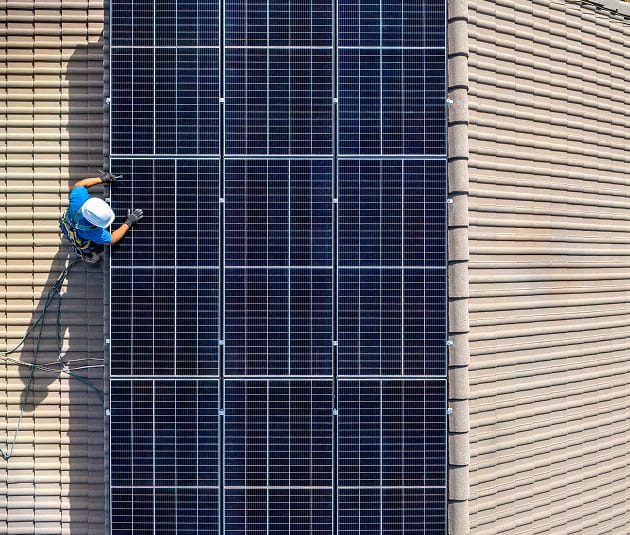
We use rooftop solar to help power common areas—lobbies, elevators, hallways—to reduce building operating expenses. In one property, we capture excess heat from a ground-floor brewery operation and reuse it to help heat shared spaces. And to round it out, we purchase green electricity from an off-site provider under a long-term contract, supporting a more reliable, lower-carbon power mix.
Results to Date
Scale & pipeline.
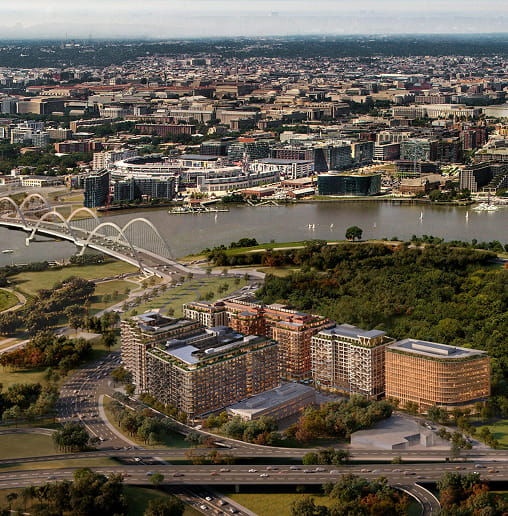
We are among the largest private landowners in Washington, DC, with an approximately 6 million sq ft build-to-core pipeline, including significant projects in Opportunity Zones and multiple buildings designed to achieve ILFI zero carbon certification most of which sit in Opportunity Zones..
Third-party standards.
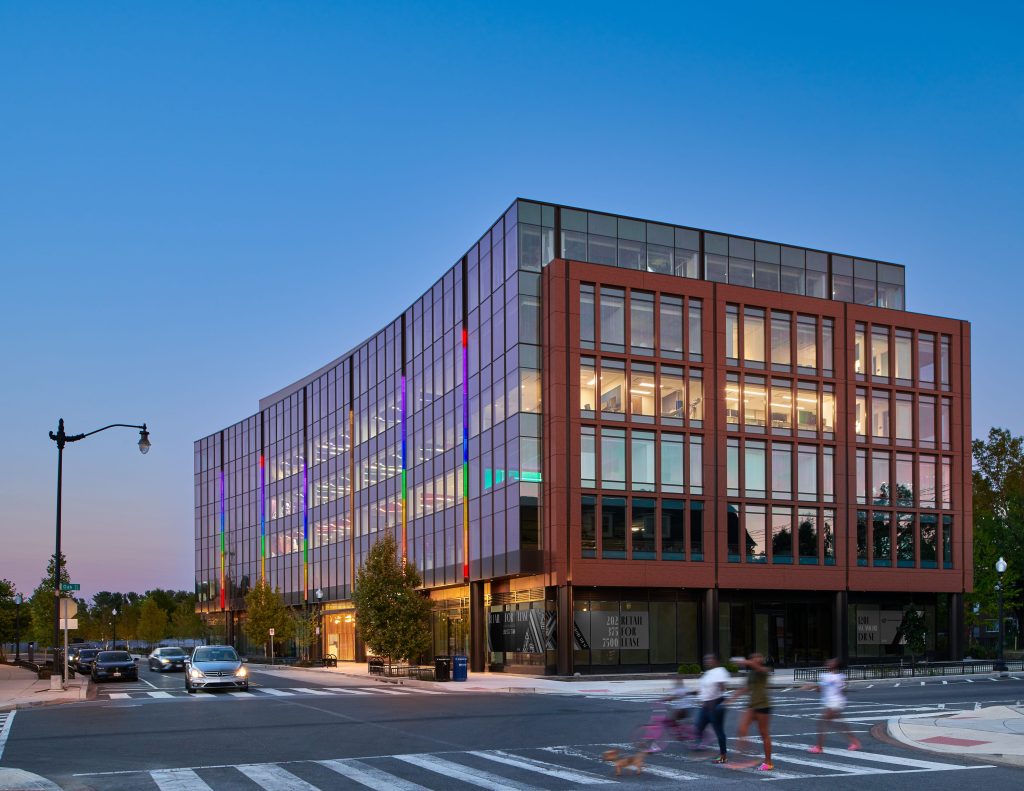
Phase One of the Bridge Commons at the Bridge District (Stratos, Alula and Poplar House) is the largest multifamily building in the world seeking ILFI Zero Carbon certification, with additional pipeline projects designed to meet ILFI Zero Carbon and LEED. Phase One was also awarded a GRESB score of 85 for the construction phase in 2024.
Measured improvements.
On recent projects, design and construction choices—particularly around concrete—have achieved ~35% embodied-carbon reductions versus conventional baselines, alongside modeled 40–50% reductions in operational emissions relative to typical local practice.
Sustainability at Redbrick
Community, by Design
Responsible development also means to build in ways that strengthen neighborhoods—adding needed housing, retail, health and wellness amenities, and public-realm improvements—while working closely with local partners and small businesses. Many of our sites are transit-served and adjacent to parks and trail networks, supporting active, healthy, and low-carbon lifestyles. Redbrick has held over 400 meetings with members of the communities in which we build — listening closely, gaining a deep understanding of their needs and long-term vision, and developing strong partnerships along the way. Other attributes of our community-focused work include:
Housing:
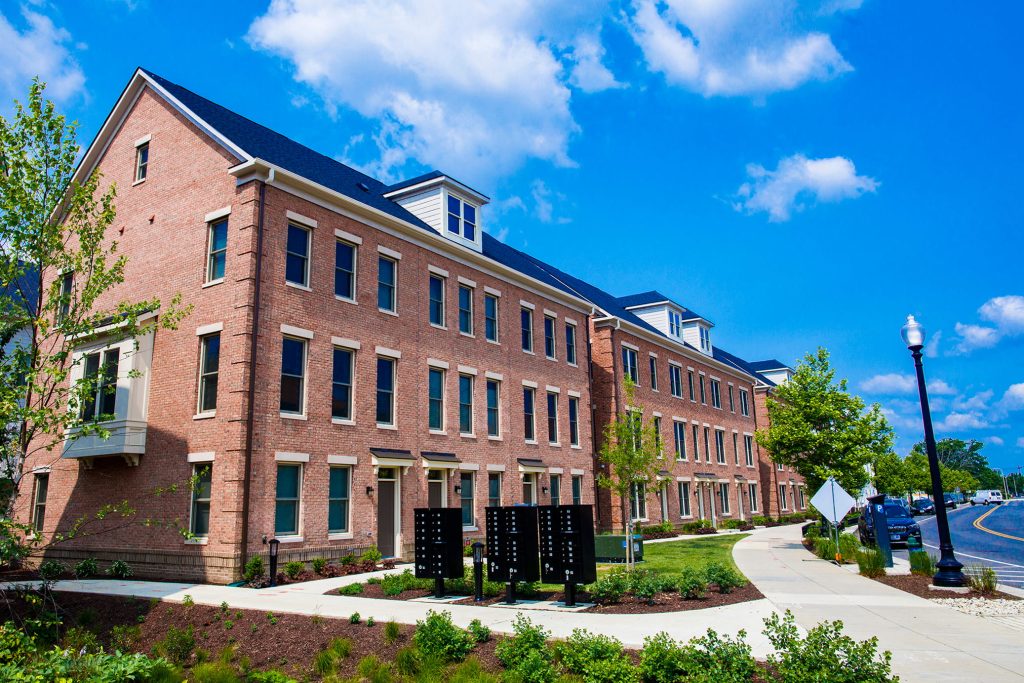
Redbrick is committed to increasing access to market-rate and ”workforce” affordable housing through its new for-sale and rental multi-family developments with over 3,400 units currently owned and delivered or under development.
Creating Job & Career Pathways:
We are keenly focused on contributing to economic activity through job creation in the construction and operational phases of our projects, with an emphasis on employing local residents and attracting local retailers. We work closely with local organizations that provide apprenticeship programs to enhance skills that lead to better jobs and higher income potential for community residents. We anticipate over 4,000 permanent new jobs to be created as a result of our development projects.
Partnering with Local Businesses:
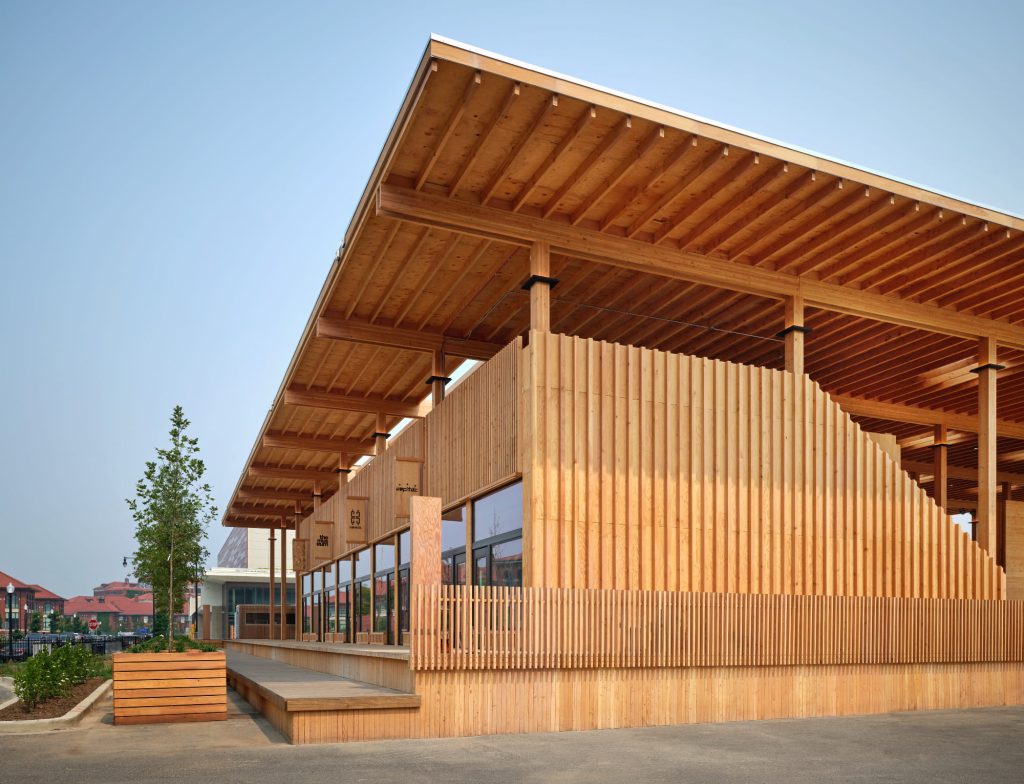
During the construction phase, we invite local and diverse small business owners to utilize our Phase Zero spaces to take a grow-and-learn approach to build their businesses. This could include startups like farmers’ markets, mom and pop-style retail booths, and food halls to assess restaurant concepts. We prioritize local, and specifically minority-owned retailers, in the new neighborhoods we are building. In addition, we have engaged nine local businesses with contracts in excess of $12 million to date during the construction of our projects.
Who We Are
We are a vertically integrated owner, developer, and operator focused on large-scale, institutional quality place-making projects. Our approach connects long-term capital to high-quality assets where decarbonization, operational discipline, and community investment work together to create value.